



Ukraine’s system following death is defined by national law, administrative procedure, and diverse religious and cultural practices. The sequence starts legally: a medical professional issues a medical death certificate (лікарське свідоцтво про смерть), and a family member or authorized representative must register the death at the local civil registry office (ЗАГС, registry of civil acts) typically within three days—though sometimes within five days if the medical certificate is delayed. Once registered, the civil registry issues the official death certificate (Свідоцтво про смерть) generally within one or two days in urban areas.
Immediate Sequence: From Death to Registration
First, death must be certified by a medical professional. Then the family or representative registers the event at the local ЗАГС within three days—or within five days if certification was delayed. Following registration, the official death certificate is issued usually within one or two days in urban centers; processing may take longer in rural or remote areas.
Funeral Services and Providers
Funeral services are provided by either communal municipal enterprises or private providers under formal contracts with local authorities, as required by the Law of Ukraine “On Burial and Funeral Business” (enacted 10 July 2003; effective 1 January 2004). These providers operate under a system that stipulates state guarantees for proper treatment of remains, respect for the decedent’s expressed wishes (including burial or cremation), maintenance of burial sites, and regulated pricing for funeral services.
Disposition Options: Burial and Cremation
Burial is the default method of disposition under Ukrainian law. Cremation is permitted but only if explicitly requested by the deceased or their representative. Ashes may be interred in columbarium niches, existing family plots, or burial grounds, according to available local infrastructure and licensed provider arrangements.
Body Preparation, Viewing, Wake
There is no national legal requirement or standard governing practices such as body washing, dressing, embalming, or wake duration. In some rural Orthodox Christian communities, traditional rituals include family-led washing and dressing of the body and displaying it at home—often oriented toward icons—but these remain regional cultural customs rather than universal norms.
Religious and Regional Funeral Rituals
Among Eastern Orthodox Christians—the majority in Ukraine—memorial services known as панахида (panakhyda; memorial service) are observed on the third, ninth, and fortieth days after death, and on anniversaries. These may be held in church, at the graveside, or in the home. A customary element is the preparation and sharing of коливо (kolyva; memorial wheat), a sweetened dish symbolizing remembrance and community.
Regional and Ethnic Variants, Historical and Contemporary Practice
Funeral customs vary significantly by region. In the Carpathian highlands—among Hutsuls, Lemkos, and Boykos—traditional funerals may include extended home vigils or trizna (funeral feast), reflecting strong ethnic traditions. Contemporary urban families may observe only modest memorial meals following a panakhyda, reflecting preferences for privacy and adaptation to modern lifestyles rather than standardized practice.
Wartime Alterations to Funeral Practice
Since the war began in February 2022, funerals have often been shortened due to fear of airstrikes. For example, coffins may be taken directly to the cemetery without a church service; some families forego ceremony altogether and opt for cremation, receiving the urn afterward. In demined areas such as Kherson and Zaporizhzhia regions, families may wait for clearance before burial. Requests to divide and repatriate ashes have increased, especially when relatives are scattered across Europe, the United States, or Brazil.
Post-Burial Mourning and Remembrance
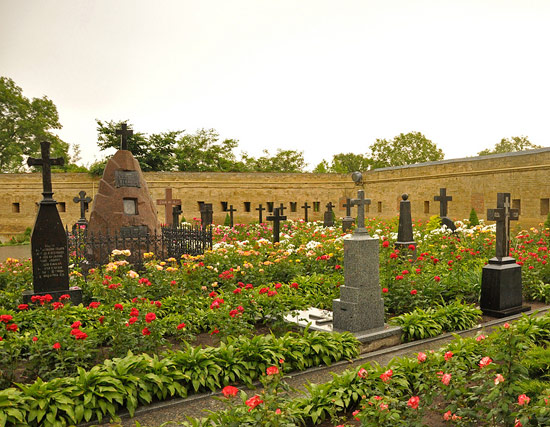
Remembrance continues well beyond burial. Orthodox households typically observe panakhyda services on liturgical commemorative dates—such as Soul Saturdays during Lent or Radonitsa (the Tuesday after Easter)—and on traditional memorial dates such as the fortieth day and one-year anniversary. Families may bring kolyva or simple offerings, maintain gravesites, and hold private or communal memorial meals. In rural areas, families often visit and clean gravesites on these specified dates. Public or national commemorations—such as reinterments or military funerals led by senior religious figures—occur in exceptional contexts and should not be seen as part of daily civilian practice.
These practices in Ukraine reflect a structured legal-administrative framework—covering certification, registration, regulated funeral provision, and cemetery governance—combined with Eastern Orthodox rituals like panakhyda and kolyva, and a diverse mosaic of regional and ethnic traditions. The result is not a monolithic national funeral culture but a layered system where law and deeply embedded community practices coexist.
Death and Mourning at a Glance
| Feature | Ukraine |
|---|---|
| Registration deadline | 3 days (5 days if medical certificate delayed) |
| Death certificate issuance time | Typically 1–2 days in urban areas |
| Funeral services providers | Municipal or private under contract per law |
| Disposition options | Burial by default; cremation only if explicitly requested |
| Body preparation | Unregulated; family-led washing/dressing in some rural contexts |
| Wake/viewing | Home display in some rural Orthodox traditions; not universal |
| Religious rites | Panakhyda on days 3, 9, 40 and anniversaries; kolyva communal offering |
| Wartime changes | Shortened ceremonies; direct cemetery transfer; cremation without ceremony |
| Remembrance practices | Memorial services on liturgical dates, cemetery visits, meals; regional customs |
| Regional/ethnic variation | Carpathian highland rites, rural folk customs, urban adaptation |