


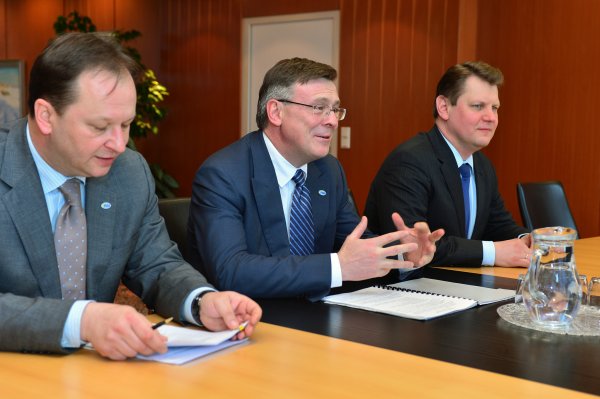

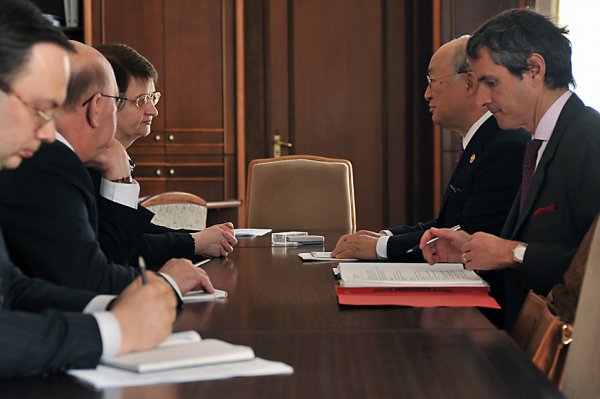


Business meetings in Ukraine combine professional preparation with close attention to credibility, personal trust, and dependable execution. Practices vary among public authorities, state-owned enterprises, owner-managed companies, industrial groups, technology firms, and internationally oriented businesses. Foreign visitors should begin formally, recognize organizational rank, arrive with a clear mandate, and allow counterparts to assess both the proposal and those responsible for delivering it.
Wartime conditions remain integral to planning. Air-raid alerts, curfews, transport disruption, power interruptions, and local security restrictions can delay, interrupt, relocate, or cancel meetings at short notice. Ukrainian is the sole state language and is required in the work of public authorities and state or municipal organizations. English is common in many internationally engaged companies, but confirm the working language and any need for interpretation. Russian should not be assumed acceptable or used by default.
Preparation
An introduction from a respected customer, adviser, chamber of commerce, trade association, professional-services firm, or mutual contact can establish initial confidence. Direct approaches are also accepted, particularly by technology companies and internationally experienced businesses, provided the request identifies the proposed transaction, the visitor's authority, and the intended outcome.
Research the organization, ownership, senior management, financial standing, regulatory position, and decision structure. Determine who can approve the transaction and whether public procurement, donor funding, licensing, certification, security review, or localization requirements apply. Due diligence should cover beneficial ownership, anti-corruption controls, sanctions exposure, banking channels, territorial restrictions, and the proposed end use and end user. United States companies should assess applicable Office of Foreign Assets Control sanctions and Bureau of Industry and Security export controls, especially for dual-use, defense-related, communications, energy, and advanced-technology products.
Prepare a concise agenda, participant list, company profile, technical specifications, pricing assumptions, implementation schedule, and proposed next steps. Ukrainian versions of important materials are advisable and may be required for public authorities, state-owned organizations, tenders, legal documents, or technical approvals. English may suffice in multinational, technology, financial, and export-oriented firms, but agree this beforehand.
Use a qualified interpreter for complex commercial, legal, or technical discussions unless every participant is fully comfortable in the chosen language. The interpreter should understand the sector, remain independent, and follow appropriate confidentiality safeguards. For meetings in Ukraine, establish a security and continuity plan covering shelters, air-alert procedures, curfews, overland travel, communications, backup power, and emergency contacts.
Scheduling
Request meetings at least one week in advance. Appointments with senior executives, government officials, or formal delegations may require several weeks' notice. State the purpose, expected duration, format, participants, working language, and matters on which guidance or a decision is sought. Reconfirm shortly before the appointment and, when conditions are uncertain, again that day.
Schedules vary, although a Monday-to-Friday working week and office hours broadly between 9 a.m. and 6 p.m. are common. Midmorning and early-afternoon appointments are often practical. Do not assume availability near the beginning or end of the day, when curfews, transport constraints, family responsibilities, or power interruptions may be especially relevant.
While martial law remains in force, statutory public holidays do not automatically operate as mandatory nonworking days under the usual labor rules. Organizations may nevertheless close or reduce staffing around New Year's Day, Christmas on December 25, Easter, Constitution Day on June 28, Ukrainian Statehood Day on July 15, Independence Day on August 24, and Defenders Day on October 1. Confirm availability directly rather than relying solely on a holiday calendar. Summer leave can also reduce attendance.
Punctuality demonstrates respect and preparation. Allow substantial travel time, but never disregard an air alert, curfew, checkpoint instruction, or other security direction to preserve an appointment. If delayed, notify the host promptly and provide a realistic revised arrival time. Keep the agenda flexible because a meeting may move online, continue from a shelter, or be rescheduled with little notice.
Meeting Protocol
Initial meetings are often formal even when the atmosphere later becomes warm. Conservative business attire suits government, finance, law, traditional industry, and meetings with senior executives. Technology, creative, and younger companies may dress less formally, but neat professional clothing remains the safest choice for a first meeting.
Begin with greetings, introductions, and acknowledgment of the host's time. Coffee, tea, or water may be offered during the opening conversation; accepting is courteous but not obligatory. Hospitality should not obscure commercial, legal, procurement, or compliance requirements.
Communication may be candid and serious. A restrained expression does not necessarily indicate hostility or disinterest. Be courteous, factual, and precise rather than excessively promotional. Adaptability and decisiveness are valued, particularly when operating conditions require rapid change.
Religious practice varies, and many workplaces are secular. Do not assume that a counterpart follows a particular denomination or calendar, drinks alcohol, or has no dietary restrictions. If an air-raid alert sounds, immediately follow the host organization's shelter and security procedures.
Entering Meeting Room: Hierarchy
Organizational rank, ownership, professional responsibility, and decision authority may shape seating and speaking order. In owner-led businesses, traditional industrial organizations, state-owned enterprises, and public bodies, the most senior participant may open the meeting, set its tone, and retain final judgment. International companies and technology firms may work more collaboratively, but authority should still be clarified before substantive negotiations.
Allow the host to direct seating. A visiting delegation should ideally include someone whose seniority and mandate reasonably match those of the principal Ukrainian counterpart. Sending only junior representatives to meet an owner, senior official, or chief executive can suggest that the visitor is conducting preliminary discussions rather than presenting an authorized proposal.
Senior participants are normally greeted and introduced first. Position and responsibility are more reliable guides than age. Gender should not be used to infer rank or decision authority; women hold senior roles across Ukrainian business, government, and professional life. Address and engage each participant according to the stated title and function.
Introductions
Stand for introductions when circumstances permit. A firm but not forceful handshake with moderate eye contact is a common professional greeting. Follow the individual's lead if no handshake is offered because of personal preference, health, security, or practical conditions.
State your full name, position, company, and responsibility for the proposed project. Introduce the most senior visiting delegate first, followed by other participants in order of responsibility. Briefly explain each person's role, particularly when the delegation includes technical specialists, lawyers, advisers, or interpreters.
A Ukrainian greeting such as dobryi den, meaning "good day," is appreciated when pronounced carefully, but it should not replace a clear introduction in the agreed working language. Use the name and pronunciation provided by the individual. Do not substitute Russian forms for Ukrainian personal names or place names.
Forms of Address
Begin formally. In English, use the relevant professional title or Mr. or Ms. with the surname until invited to use first names. In direct Ukrainian address, pane for a man and pani for a woman are respectful forms that may accompany a name or title. Usage varies by organization, generation, region, and degree of formality, so follow the host's example.
First name plus patronymic remains in use in some governmental, academic, traditional, and other formal settings, although it is less common in many younger and internationally oriented businesses. Never construct, translate, or guess a patronymic. Use the form given in correspondence or during the introduction.
Ukrainian distinguishes between informal and formal forms of “you.” Use the formal vy when speaking Ukrainian unless the counterpart proposes greater informality. Recognize academic, military, diplomatic, government, and professional titles where relevant. A shift to first names may indicate familiarity, but it does not remove differences in authority.
Business Cards
Business cards remain useful, although electronic contact exchange is common. Cards may be exchanged during introductions or near the start of the meeting without elaborate ceremony. Present and receive them respectfully, and read the information before putting the card away.
A bilingual English-Ukrainian card is helpful for sustained work in the country. Include the person's full name, title, company, mobile number, email address, and relevant business location. Use accurate Ukrainian spelling or transliteration, and ensure the title reflects actual authority. Do not use a Russian-only translation unless the recipient specifically requests one.
Digital profiles and messaging contacts may be exchanged after introductions. Ask which channel the counterpart prefers and obtain permission before adding anyone to a group conversation. Send confidential, personal, export-controlled, or security-sensitive information only through approved systems.
Body Language
Maintain attentive posture and moderate eye contact. Frequently looking away may suggest uncertainty, while prolonged staring can appear confrontational. Interpret a serious expression alongside the person's words, questions, and subsequent actions rather than treating it as a negative signal by itself.
Handshakes are common in professional settings. Embraces and cheek kisses generally belong to established personal relationships rather than first business meetings. Avoid excessive touching, backslapping, or highly animated gestures until the counterpart's preferences are clear.
Do not point directly at people, repeatedly check a phone without explanation, or conduct side conversations while someone is speaking. Keep devices silent unless needed for air-alert notifications or urgent operational communication. A participant monitoring security alerts should not be assumed inattentive.
Meeting Starters: Small Talk Versus "Getting Down to Business"
Brief opening conversation can establish rapport before the agenda begins. Suitable subjects include the journey, the organizations represented, the industry, professional experience, Ukrainian culture, food, technology, sports, and informed observations about the city or region. Genuine interest is more effective than exaggerated praise.
Questions about family may arise as a relationship develops, but visitors should not press for personal information. Counterparts may have relatives serving in the armed forces, living abroad, displaced, or otherwise affected by the war. Do not use wartime experiences as casual conversation, ask intrusive questions about losses, or assume someone wishes to discuss military operations, politics, displacement, or language identity. Follow the counterpart's lead and respond with restraint.
After the opening courtesies, the senior host or organizer will usually signal the transition to business. A clear statement of objectives is appreciated. Relationship-building and substantive discussion proceed together: competence, honesty, preparation, and conduct during negotiations all contribute to trust.
Conducting Meeting
Provide an agenda but remain ready to adjust the order or depth of discussion. Open with a concise explanation of the proposal, its commercial rationale, and its value to the Ukrainian organization. Support claims with references, technical data, delivery arrangements, and realistic financing assumptions. Avoid lengthy corporate presentations that postpone discussion of price, risk, implementation, and responsibility.
Expect direct, detailed questions, particularly about cost, delivery, specifications, financing, and performance. Challenging questions do not necessarily indicate rejection. Answer plainly, acknowledge information not yet available, and give a realistic date for providing it. Vague promises, evasive qualifications, and aggressive sales language weaken credibility.
Express disagreement respectfully and ground the discussion in facts, contractual language, technical standards, and practical consequences. Avoid embarrassing or dismissing another participant in front of colleagues. Where misunderstanding is possible, ask open questions and seek confirmation from the relevant specialist. Silence must not be treated as agreement.
Translate key proposals, specifications, schedules, and draft terms into Ukrainian when they will circulate internally or be submitted to public bodies. With consecutive interpretation, speak in manageable sections and allow time for complete translation. Record verbal understandings in minutes or a meeting summary, since informal agreement does not replace a contract executed by authorized representatives.
Decision-Making
Decision-making depends heavily on ownership and organizational structure. In owner-managed and more traditional businesses, significant decisions may rest with one senior person. Other participants may gather information or negotiate details without authority to approve final terms. International, technology, and professional-services firms may decentralize responsibility, with technical, legal, and financial teams contributing before executive approval.
Government bodies, state-owned enterprises, regulated industries, and donor-funded projects may require procurement procedures, compliance reviews, security checks, budget authorization, or several approval levels. Establish early who recommends, who evaluates, who controls funding, and who can sign. A positive meeting should not be represented as an award or commitment before every required procedure is complete.
Trust may improve access and confidence, but foreign companies should rely on transparent procedures, documented authority, and enforceable terms. Negotiations may address price, payment security, delivery, warranties, localization, currency risk, and the allocation of operational risks. Set priorities and limits beforehand, and explain the basis of any nonnegotiable legal or compliance provisions.
Delays can result from hierarchy, financing, regulation, mobilization, power disruption, security events, or consultation with an absent decision-maker. Follow up steadily and professionally rather than imposing artificial deadlines. When timing is critical, explain the practical consequence, provide a decision schedule, and offer workable alternatives.
Gifts and Splitting the Bill
Business gifts are not required. A modest item associated with the visitor's company, city, or country may be suitable after a productive meeting or at the end of a visit. It should be proportionate, transparent, and permitted by both organizations' policies. Avoid cash, expensive personal items, and anything that could influence a procurement, regulatory, or official decision. Gifts involving public officials require particular caution under anti-bribery and ethics rules.
If invited to a counterpart's home, chocolates, a quality food item, or flowers may be appropriate. Bouquets traditionally contain an odd number of flowers because even-numbered arrangements are associated with funerals and mourning. Offer alcohol only when the recipient's preferences and applicable organizational rules are known. Declining alcohol for health, religious, professional, or personal reasons is acceptable.
At a business meal, the person or organization extending the invitation will often expect to pay, but do not assume this where procurement, donor, or corporate-expense rules apply. A visitor may offer to contribute without prolonging a disagreement over the bill. If separate payment has been agreed, handle it discreetly. Reciprocity may take the form of hosting a later meal or extending hospitality on a future visit.
Follow-Up
Send a concise follow-up message the same day or by the next business day. Thank the participants, summarize the principal points, identify unresolved questions, and assign responsibilities and target dates. Attach corrected presentations, technical documents, pricing information, or draft terms as promised. For significant negotiations, request confirmation that the written summary accurately records the discussion.
Email is appropriate for formal records and documents. Messaging applications are widely used for scheduling and rapid operational contact, but should supplement rather than replace formal correspondence, procurement records, and signed agreements. Confirm the preferred channel and apply approved safeguards to confidential, export-controlled, personal, or security-sensitive information.
Maintain contact at a frequency proportionate to the project. Substantive updates are more effective than repeated requests for a decision. Continuity matters, so explain any change in the principal relationship manager. Report delays early, honor commitments, and remain responsive during implementation. Reliable performance after the initial meeting is essential to sustaining a Ukrainian business relationship.