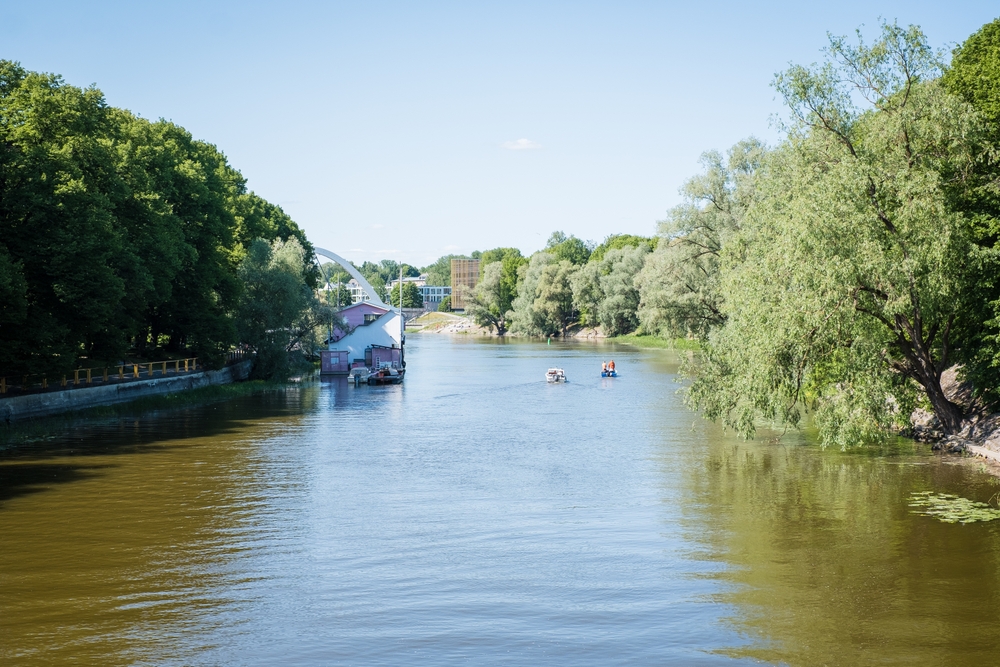
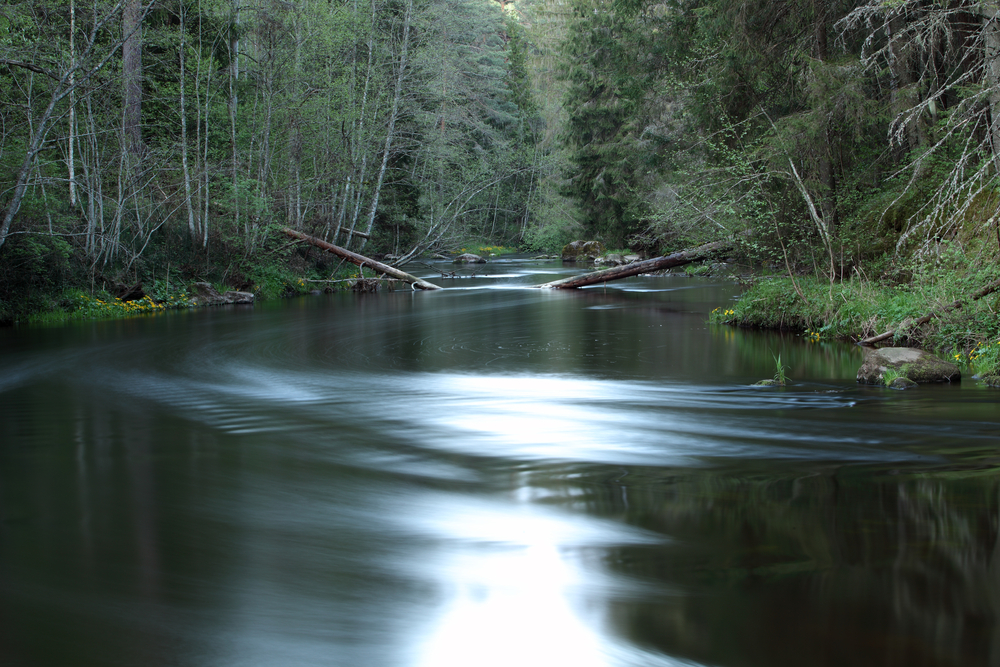
Estonia is interlaced with a network of rivers that enhance its ecological richness and cultural heritage. These rivers, meandering through dense forests, tranquil countryside, and historic towns, are crucial for the country's diverse ecosystems. They provide habitats for various species of flora and fauna and are essential for maintaining the natural balance of Estonia's environment. In addition to their ecological importance, these rivers are significant for local communities, supporting agriculture and offering recreational opportunities such as fishing, boating, and nature watching. The rivers of Estonia also hold historical value, having been routes for trade and cultural exchange over the centuries. The table below presents an overview of the major rivers in Estonia, detailing their lengths, sources, and outflows.
River Name
Length*
Source
Outflow
Emajõgi
100 km (62 mi)
Lake Võrtsjärv
Lake Peipus
Pärnu River
144 km (89 mi)
Pandivere Highlands
Gulf of Riga
Narva River
77 km (48 mi)
Lake Peipus
Gulf of Finland
Pedja River
104 km (65 mi)
Alatskivi Upland
Emajõgi River
Kasari River
113 km (70 mi)
Pandivere Highlands
Matsalu Bay
Väike Emajõgi
93 km (58 mi)
Lake Võrtsjärv
Emajõgi River
Põltsamaa River
106 km (66 mi)
Pandivere Highlands
Emajõgi River
Ahja River
103 km (64 mi)
Haanja Upland
Põltsamaa River
Mustjõgi
95 km (59 mi)
Pandivere Highlands
Põltsamaa River
Piusa River
75 km (47 mi)
Haanja Upland
Võhandu River
*Sources do not differentiate between the length of river that exists within the country’s borders and the overall length of the river irrespective of national borders.